
Here's How to Find a Vacuum Leak
A rough idle, poor fuel economy, or a stubborn P0171/P0174 lean code can turn a simple drive into a frustrating diagnostic puzzle. Many DIY guides still rely on outdated tricks and guesswork, leading owners to replace oxygen sensors, fuel pumps, or other expensive components that were never faulty.
Don't waste money ordering a new O2 sensor just yet. Do this fuel-trim check first.
Modern vacuum leak diagnosis combines physical inspection with live engine data. By understanding how unmetered air affects fuel trims and engine operation, you can identify the real problem quickly and avoid chasing diagnostic gremlins.

The Essential Checklist: Tools You'll Need Before Checking Vacuum Leaks
Before opening the hood, gather the right tools. A structured approach saves time and prevents misdiagnosis.
Basic Inspection Tools
- LED flashlight for inspecting tight engine compartments
- Mechanic's stethoscope or a length of fuel hose
- Spray bottle with soapy water
- Propane torch with adjustable control valve (unlit)
Advanced Diagnostic Gear (For Precise Results)
- EVAP smoke machine
- Professional OBD2 scan tool capable of reading live data streams
- Digital circuit tester for vacuum solenoid diagnostics

What Is a Vacuum Leak & Why Does It Trigger a Check Engine Light?
A vacuum leak occurs when air enters the engine without being measured by the Mass Air Flow (MAF) sensor. This extra air is commonly referred to as "unmetered air."
The engine control module calculates fuel delivery based on measured airflow. When additional air bypasses the MAF sensor, the engine receives less fuel than required, creating a lean air-fuel mixture.
Unmetered Air: The Core Issue
Under normal conditions, a healthy gasoline engine at sea level typically maintains a stable idle vacuum reading between 18 and 22 in-Hg.
When a vacuum leak develops, manifold vacuum drops, and fuel trims begin compensating for the unexpected airflow. If the leak becomes significant enough, the engine computer may store lean-condition trouble codes such as:
Common Symptoms North American Drivers Notice First
Most drivers report one or more of these symptoms:
- Rough or unstable idle
- Engine hesitation
- Increased fuel consumption
- Check Engine Light illumination
- Hissing sound from the engine bay
- Lean diagnostic codes
Ignoring a vacuum leak is expensive. Industry aftermarket estimates suggest fuel economy can decrease by 10% to 15%. Extended lean operation also raises combustion temperatures, increasing the risk of catalytic converter damage—one of the costliest emission-system repairs on modern vehicles.
How to Find a Vacuum Leak with a Scan Tool (Live Data Verification)
Experienced technicians rarely begin by spraying chemicals around the engine bay. They start with data.
Think of a scan tool as a doctor's stethoscope for the engine's breathing system.
Decoding Fuel Trims (STFT & LTFT)
One of the most common mistakes DIYers make is replacing oxygen sensors immediately after seeing a P0171 code.
Instead, check Short-Term Fuel Trim (STFT).
A vacuum leak creates a very specific pattern:
- At idle, STFT often exceeds +10%
- Long-Term Fuel Trim (LTFT) may also be elevated
- When engine speed increases to approximately 2500 RPM, STFT rapidly moves back toward normal values (within about ±5%)
Why does this happen?
At idle, the engine consumes relatively little air. A small vacuum leak represents a large percentage of total airflow.
At 2500 RPM, airflow through the throttle body increases dramatically. The leak remains the same size, making its impact proportionally smaller.
This behavior is one of the strongest indicators that you're dealing with a vacuum leak rather than a weak fuel pump or restricted injector.

Step-by-Step with a VD70S Live Data Scan Tool
- Connect the scan tool to the OBD2 port.
- Start the engine and allow it to reach operating temperature.
- Navigate to Live Data.
- Monitor:
- Record fuel trim values at idle.
- Increase engine speed to approximately 2500 RPM.
- Compare the readings.
If fuel trims drop significantly as RPM rises, a vacuum leak becomes the primary suspect.
A scan tool such as the VDIAGTOOL VD70S allows you to monitor these parameters simultaneously, making it much easier to identify the characteristic fuel-trim pattern associated with unmetered air.
3 Methods to Pinpoint the Leak Location
Once live data suggests a vacuum leak, it's time to find the exact source.
Method 1: The Visual & Audible Inspection (The "Hiss" Test)
Start with the most common failure points:
- PCV hoses
- Intake manifold gaskets
- Brake booster vacuum hose
- Vacuum tees and connectors
- EVAP system lines
Place one end of a hose against your ear and move the other end around suspected leak points. A distinct hissing sound often reveals the leak location.
Look closely for:
- Cracked rubber
- Oil-soaked hoses
- Loose fittings
- Broken plastic connectors
Many leaks are visible once you know where to look.
Method 2: The Spray Method (Propane vs. Carb Cleaner)
The internet is full of recommendations involving soapy water.
Here's the problem: on a hot engine, soapy water often evaporates before any useful observation can be made. It may also leave residue that creates false clues.
If using spray-based methods, perform testing during a cold start whenever possible.
Many technicians prefer unlit propane.
Move the propane nozzle slowly around suspected leak points while monitoring engine idle quality.
If RPM suddenly increases or smooths out, the engine is drawing propane through the leak and burning it as fuel.
Safety warning: Propane testing carries a fire risk. Never perform this procedure near exposed ignition sparks, damaged ignition wires, or fuel leaks.

Method 3: The Professional Choice — Smoke Testing
Smoke testing remains the industry standard.
A smoke machine introduces visible vapor into the intake or EVAP system under controlled pressure. Even tiny cracks that are impossible to hear can become obvious within seconds.
This is particularly valuable for:
- Intake manifold leaks
- Hidden EVAP hose failures
- Leaks underneath the intake manifold
- Hairline cracks in plastic components
For intermittent issues involving electronically controlled vacuum solenoids, smoke alone may not tell the whole story.
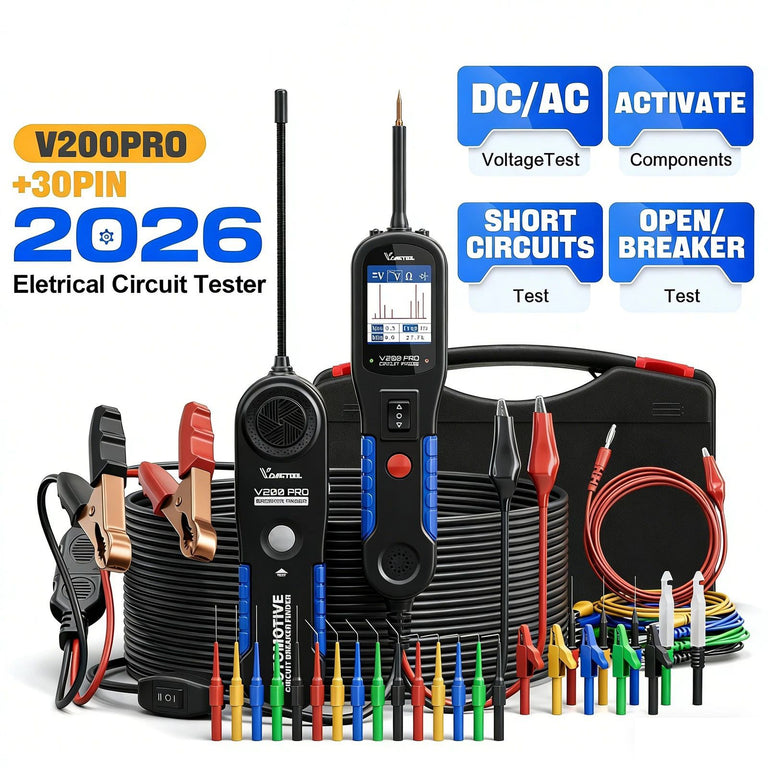
In these cases, a circuit tester such as the VDIAGTOOL V200Pro can be used to manually energize the solenoid during testing. By forcing the valve to open, you can determine whether the problem originates from a leaking hose, a faulty solenoid, or a control-circuit issue.
Misleading Signs of You Must Avoid
Even experienced technicians occasionally encounter false positives.
The MAF Sensor Trap
A contaminated MAF sensor can mimic the symptoms of a vacuum leak.
This commonly occurs on vehicles using improperly oiled aftermarket air filters.
Dirty sensor elements underreport airflow, causing fuel trims to rise and creating lean-condition codes.
Before removing the intake manifold, inspect and clean the MAF sensor using a dedicated MAF cleaner.
A five-minute cleaning procedure can sometimes eliminate what appears to be a major vacuum leak.
Exhaust Leaks Upstream of the O2 Sensor
This is one of the most overlooked causes of false lean codes.
A crack in the exhaust system before the upstream oxygen sensor can draw fresh air into the exhaust stream through a venturi effect.
The oxygen sensor detects extra oxygen and reports a lean condition, even though the intake system may be perfectly sealed.
The result looks nearly identical to a vacuum leak on a scan tool.
Whenever fuel trims suggest a lean condition, inspect both the intake and exhaust systems before replacing parts.
Summary & Prevention: Keeping Your Vacuum System Intact
Vacuum leak diagnosis has evolved.
The old approach relied entirely on listening for hissing sounds and spraying chemicals around the engine bay. Sometimes it worked. Often it didn't.
Today's most effective strategy follows three levels:
- Visual inspection for obvious failures
- Live data analysis using fuel trims
- Smoke testing for definitive confirmation
Fuel-trim analysis is often the fastest way to separate a true vacuum leak from fuel-delivery problems or sensor errors.
A capable scan tool can save hundreds of dollars in unnecessary parts replacement and diagnostic fees. More importantly, it helps you understand exactly how the engine is responding before you begin repairs.
FAQ: Navigating Troublesome Vacuum Leaks
Can a vacuum leak fix itself when the engine warms up?
Temporarily, yes. Plastic and aluminum intake components expand as temperature increases. A gasket that leaks during a cold start may seal once the engine reaches operating temperature. The underlying defect remains and should still be repaired.
Will driving with a vacuum leak damage my engine?
Short trips are usually manageable, but prolonged operation can cause persistent lean combustion, engine knock, overheated spark plugs, and accelerated wear on valves and pistons.
How much does it typically cost to fix a vacuum leak at a shop in the US?
Costs vary significantly. Replacing a cracked vacuum hose may cost $100 to $150, including diagnosis and labor. Intake manifold gasket replacement commonly ranges from $400 to $800 or more, depending on engine configuration and labor requirements. Finding the leak yourself before visiting a repair shop can substantially reduce overall repair costs.


