
P0174 Code: What It Means, Causes, Symptoms & How to Fix It (2026)
If your check engine light just popped on and your OBD-II scanner reads the P0174 code, you're probably wondering what's wrong with your car—and how to fix it without breaking the bank. You're not alone. The P0174 code is one of the most common OBD-II trouble codes, affecting millions of drivers yearly. In this guide, we'll break down everything you need to know to diagnose and resolve the P0174 code, so you can get back on the road safely and avoid costly mechanic bills.

What Does the P0174 Code Mean?
Simply put, the P0174 code stands for "System Too Lean (Bank 2)". Let's break that down in plain words. Your car's engine runs on a precise mixture of air and fuel—ideally 14.7 parts air to 1 part fuel (known as the "stoichiometric ratio"). A "lean" mixture means there's too much air and not enough fuel in the combustion chamber for Bank 2 of your engine.
First, what's Bank 2? Most modern engines have multiple cylinder banks. Bank 1 is the side of the engine with the number 1 cylinder, and Bank 2 is the opposite side (refer to your vehicle's owner's manual for exact placement, as it varies by make and model). The P0174 code specifically points to issues on Bank 2, so you can narrow your diagnosis to that side of the engine.
It's crucial to note that P0174 is a "result code," not a "cause code." This means the code itself doesn't tell you why the mixture is lean—it just alerts you to the problem. To fix it, you'll need to identify and repair the root cause.

Common Symptoms of the P0174 Code
Sometimes, the check engine light is the only sign of a P0174 code. But in most cases, you'll notice one or more of these symptoms, which can help confirm the issue:
- Check Engine Light (CEL): The most obvious sign—your dashboard CEL will illuminate (solid or flashing; a flashing light means the issue is severe and you should stop driving immediately).
- Rough Idling or Stalling: A lean mixture can make your engine shake or even shut off when stopped at red lights or in traffic.
- Reduced Fuel Economy: When your engine runs lean, it burns more fuel to compensate, leading to lower gas mileage.
- Loss of Power: You'll feel sluggish acceleration, especially when merging onto highways or climbing hills.
- Engine Misfires: A misfire (when a cylinder doesn't ignite properly) can cause your car to shake, and you may smell unburned fuel from the exhaust.

Top Causes of the P0174 Code (Ranked by Frequency)
To save you time and frustration, we've ranked the most common causes of the P0174 code from most to least likely. Start with these when diagnosing your vehicle:
1. Vacuum Leaks (Most Common Cause)
Vacuum leaks are the #1 culprit behind the P0174 code. Your engine uses vacuum hoses and gaskets to regulate air flow. If any of these hoses crack, loosen, or break, extra air is sucked into the intake system—throwing off the air-fuel mixture. Common leak points include:
• Intake manifold gaskets (worn or damaged over time)
• PCV (Positive Crankcase Ventilation) valve or hoses
• Vacuum hoses connected to the throttle body or EGR valve
To diagnose a vacuum leak, you can use a smoke tester (preferred by mechanics) or spray a small amount of carburetor cleaner on suspected leak points. If your engine's RPM (revolutions per minute) increases when you spray the cleaner, you've found a leak.
2. Faulty Oxygen Sensor
The oxygen (O2) sensor on Bank 2 (usually the "upstream" sensor, located before the catalytic converter) monitors the amount of unburned oxygen in the exhaust. It sends this data to your car's ECU (Engine Control Unit), which adjusts the fuel flow accordingly. A faulty O2 sensor can send incorrect data to the ECU, leading to a lean mixture.
O2 sensors typically last 80,000–100,000 miles. If your car has high mileage, this is a likely suspect. You can test the sensor with a multimeter or OBD-II scanner that reads live data—look for voltage fluctuations between 0.1V and 0.9V (a stable voltage means the sensor is bad).

3. Clogged Fuel System
A lean mixture can also happen if your engine isn't getting enough fuel. Common fuel system issues include:
• Clogged fuel filter (restricts fuel flow)
• Weak fuel pump (low fuel pressure)
• Dirty or clogged fuel injectors (can't spray enough fuel into the cylinders)
To check fuel pressure, you'll need a fuel pressure gauge (most auto parts stores rent these). Refer to your vehicle's manual for the correct pressure range—if it's below specs, you may need to replace the fuel pump or filter.
4. MAF Sensor Issues
The MAF (Mass Air Flow) sensor measures the amount of air entering the engine. If it's dirty or faulty, it can send wrong air flow data to the ECU, which miscalculates the fuel needed. MAF sensors get dirty from oil leaks or dust buildup—you can clean them with specialized MAF cleaner (avoid using regular cleaner, as it can damage the sensor).
Step-by-Step Guide to Fix the P0174 Code
You don't need to be a professional mechanic to fix the P0174 code—follow these steps to diagnose and resolve the issue:
Step 1: Confirm the Code with an OBD-II Scanner
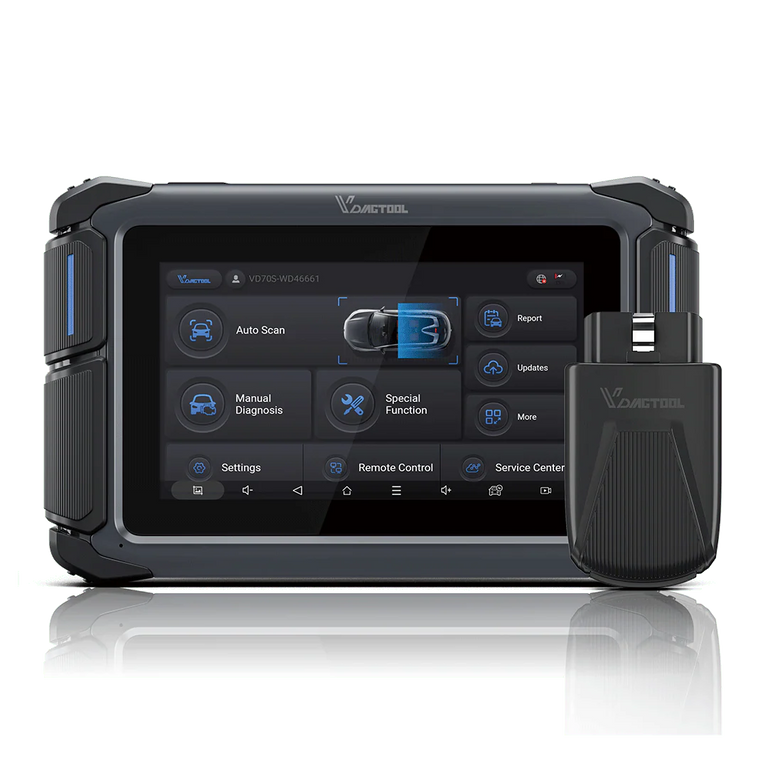
First, use a reliable OBD-II scanner to confirm the P0174 code. Look for "freeze frame data," which shows the conditions (speed, RPM, engine temp) when the code was triggered—this can help narrow down the cause. We recommend the VDIAGTOOL VD70S, which reads full-system data and provides detailed freeze frame info for accurate diagnosis.
Step 2: Inspect for Vacuum Leaks
As vacuum leaks are the most common cause, start here. Visually check all vacuum hoses for cracks, splits, or loose connections. Replace any damaged hoses and reattach loose ones. For hard-to-find leaks, use a smoke tester or carburetor cleaner (as mentioned earlier).
Step 3: Test and Replace the Oxygen Sensor (if needed)
Use your scanner to check the O2 sensor's live data. If the voltage is stable (not fluctuating), replace the sensor. Make sure to buy the correct sensor for your vehicle (check the part number in your manual) and reset the code after replacement.
Step 4: Check the Fuel System
Test fuel pressure with a gauge. If it's low, replace the fuel filter first (it's cheap and easy). If pressure is still low, the fuel pump may need replacement. Clean dirty fuel injectors with a fuel system cleaner (available at auto parts stores).
Step 5: Clean or Replace the MAF Sensor
Remove the MAF sensor (disconnect the battery first to avoid electrical damage) and spray it with MAF cleaner. Let it dry completely before reinstalling. If cleaning doesn't work, replace the sensor.

Step 6: Verify the Repair
After making repairs, use your scanner to clear the P0174 code. Drive your car for at least 10–15 miles (including highway and city driving) to see if the code returns. If it doesn't, you've fixed the issue!
Can I Drive with the P0174 Code?
Short answer: Only if necessary, and for short distances. Driving with a lean mixture can damage your engine's valves, pistons, and catalytic converter (a costly repair, often $1,000+). If your check engine light is flashing, stop driving immediately—this means the engine is misfiring severely, and continuing to drive could cause major damage.
Need a tool to help you?
Diagnosing the P0174 code is much easier with a reliable OBD-II scanner. The VDIAGTOOL VD70S supports full-system diagnosis, reads freeze frame data, and works with most makes and models. It's user-friendly for beginners and powerful enough for DIY mechanics—perfect for fixing the P0174 code quickly. ➡️Learn more about the VD70S here.
FAQs About the P0174 Code
Q: How much does it cost to fix the P0174 code?
A: Costs range from $100–$800+, depending on the cause. Vacuum hoses/gaskets cost $100–$200 to replace, O2 sensors $200–$400, fuel pumps $500–$800, and MAF sensors $150–$300.
Q: What's the difference between P0171 and P0174?
A: P0171 is "System Too Lean (Bank 1)," while P0174 is Bank 2. If both codes appear, the issue is likely global (e.g., faulty MAF sensor or fuel pump), not bank-specific.
Q: Will the P0174 code go away on its own?
A: No. The code will return until the root cause is fixed. Clearing the code without repairs is just a temporary fix.
| Extended Reading ➡️ P0171 code、 P0172 code、 P2096 code |


