
P0128 Code: Why Your Engine Stays Cold & How to Fix It Properly
If you've noticed your "Check Engine" light glowing amber on a frosty morning in Chicago or a damp evening in Seattle, and your scan tool reveals the code P0128, you're dealing with a "Coolant Thermostat Below Thermostat Regulating Temperature" error. While your car might seem to drive fine, ignoring this code is a recipe for poor fuel economy, increased emissions, and a cabin heater that feels more like a refrigerator.
Quick Answer: What Does P0128 Mean?
P0128 indicates that your Engine Control Module (ECM) detected that the coolant temperature failed to reach the required operating level (typically 160°F–195°F) within a specific timeframe. This is often caused by a thermostat stuck open, a leaking thermostat gasket, or a faulty Engine Coolant Temperature (ECT) sensor providing inaccurate data.

The Causes of P0128
Standard repair manuals will tell you to just "swap the thermostat." However, seasoned technicians know that the modern Engine Management System is far more nuanced.
Common Culprits at a Glance
Before diving into the complex scenarios, ensure you've ruled out these standard hardware failures that account for approximately 80% of P0128 cases:
- Thermostat Stuck Open: The most frequent cause; the valve fails to close, allowing constant coolant flow.
- Deteriorated Thermostat Gasket: Even if the valve works, a leaking seal allows coolant to bypass the thermostat.
- Low Coolant Level: Paradoxically, insufficient fluid can lead to air pockets that prevent the sensor from reading the true engine temperature.
- Coolant Temperature Sensor (ECT) Malfunction: The sensor may be sending "lazy" or inaccurately low voltage signals to the ECM.
- Malfunctioning Cooling Fan: An electric fan that stays on constantly (due to a faulty relay) will overcool the engine.

3 Sneaky Causes of P0128
1. The "Cheap Aftermarket" Trap
We recently saw a DIYer in Minnesota who replaced his thermostat three times in one winter. Each time, the P0128 code returned within 48 hours. After hooking up a VDIAGTOOL diagnostic scanner, we realized the "budget" thermostats he bought were opening at 175°F instead of the OEM-required 192°F. In the extreme North American cold, that 17-degree difference prevented the ECM from ever seeing the "target" temperature, keeping the car in a perpetual state of "warm-up."
2. Extreme North American Winters
In regions like the Upper Midwest or Canada, P0128 can sometimes be a "ghost code." If you are driving at highway speeds in -20°F weather, the sheer volume of sub-zero air hitting the radiator can actually overcool the engine, even with a functioning thermostat. This is why you often see long-haul truckers in the U.S. using "winter fronts" or grille covers—to physically block air and help the engine maintain thermal efficiency.
3. The "Slow" Sensor
Not all sensors fail by "breaking." Some fail by "drifting." An ECT sensor might tell the computer the engine is at 150°F when it's actually at 180°F. The engine is physically hot, but the "digital truth" is cold. Before you get your hands greasy changing hardware, always verify the digital data first.
The Pro-Level Diagnostic Protocol
To avoid "parts cannon" engineering (throwing parts at a problem until it disappears), follow this professional sequence.
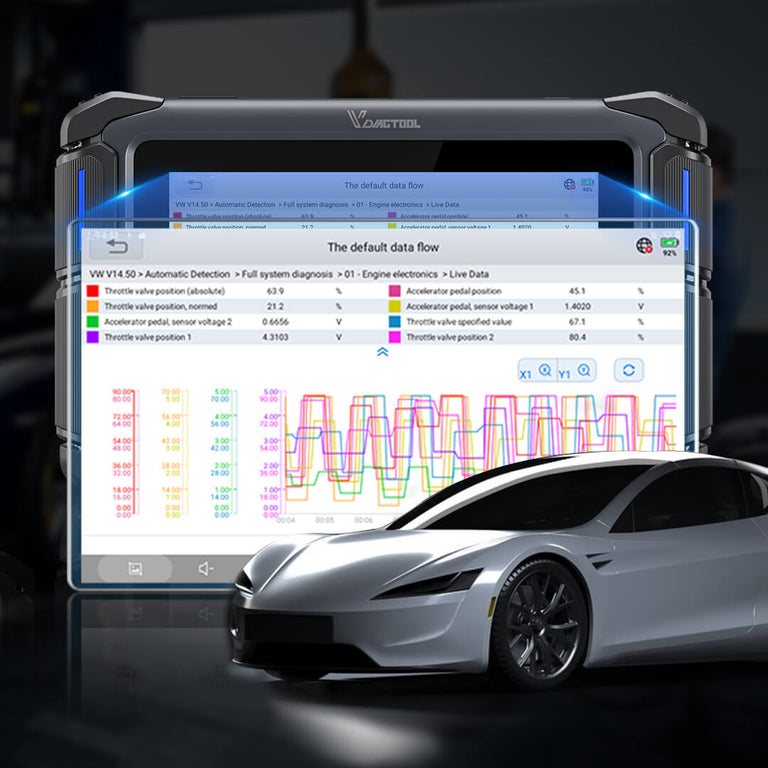
Step 1: Real-Time Data Logging
Before opening the hood, plug in a professional-grade tool. Navigate to the "Live Data" or "Graphing" menu and select the ECT (Engine Coolant Temperature) and IAT (Intake Air Temperature) PIDs.
Start the car from a cold start. The ECT should rise steadily. If the temperature reaches 130°F and then levels off or takes 20 minutes to reach 170°F, your thermostat is likely stuck partially open.
Step 2: The "Touch Test" (Safety Required)
Carefully feel the upper and lower radiator hoses as the engine warms up.
- Normal Behavior: The upper hose should stay relatively cool until the engine reaches operating temp, then suddenly get hot as the thermostat opens.
- P0128 Behavior: If the hose gets warm gradually from the moment you start the engine, the thermostat is "leaking" heat into the radiator prematurely.
The Hidden Cost of Ignoring P0128
Many drivers think, "If the engine isn't overheating, what's the big deal?" In reality, running "too cold" is arguably worse for your wallet than a minor leak.
1. The Fuel Economy Nightmare
When the ECM sees a P0128, it assumes the engine is still cold. To compensate, it stays in "Open Loop" mode, dumping extra fuel into the cylinders to help the engine warm up. According to EPA data, driving in a permanent warm-up state can drop your MPG by 10-15%. Over a single winter, you'll spend more on extra gasoline than the cost of a premium OEM thermostat.
2. Carbon Buildup and Catalytic Failure
Excess fuel doesn't just burn away; it leaves deposits. Running cold leads to heavy carbon buildup on your intake valves and spark plugs. More importantly, unburned fuel can enter the exhaust stream, overworking your catalytic converter and leading to a $1,500 repair bill down the road.
3. State Inspection (The Smog Test)
In many U.S. states, a P0128 will cause an automatic failure of the "Emissions Readiness" monitors. Even if you clear the code right before the test, the "Thermostat Monitor" will show as "Incomplete," and the inspector will send you home.

Expert Fix: Best Practices for North American Vehicles
If you've confirmed the thermostat is the culprit, don't just "slap it in."
- Bleed the System: Modern engines (especially from Ford and Chrysler) are notorious for "air pockets." Use a vacuum coolant filler if possible. An air pocket trapped near the sensor can trigger a P0128 even with a new thermostat.
- Check the Gasket: Sometimes the thermostat is fine, but the rubber seal has deteriorated, allowing coolant to "bypass" the closed valve.
- Use the Right Mix: In the U.S., a 50/50 blend of distilled water and the correct concentrate (HOAT, OAT, or Silicated) is vital. Incorrect coolant can corrode the thermostat housing, leading to premature failure.
FAQ: Common Questions from U.S. Drivers
Q: Can I drive with P0128 for a few weeks? A: Mechanically, yes. Your car won't explode. However, you are losing money every mile due to poor fuel economy, and your heater will be lukewarm at best—a miserable experience during a "Polar Vortex."
Q: Why did my P0128 come back after I replaced the sensor? A: Because the sensor was likely doing its job! P0128 is rarely a sensor failure; it is usually a physical temperature issue. If the code persists, check for a fan that is running constantly (fan relay stuck) or an incorrect coolant mix.
Q: Does P0128 affect my car's performance? A: You might notice a slight "hesitation" because the air-fuel mixture is too rich. Over time, the car will feel more sluggish as carbon builds up on the spark plugs.
Final Thoughts for the Professional Operator
When diagnosing P0128, the Freeze Frame Data is your best friend. It tells you exactly how fast the car was going and what the ambient temperature was when the code triggered. If the code triggered at 70 MPH in 10°F weather, you are looking at a classic "stuck open" thermostat that can't handle the wind chill.
Invest in a quality diagnostic tool, trust the data over your gut, and always aim for OEM-spec hardware to keep that "Donut" light off for good.


