
Code Reader vs. Scanner: Which Is Right for You
If you've ever stared at your car's check engine light and wondered which diagnostic tool to buy, you're not alone. Many car owners get stuck choosing between a code reader and a diagnostic scanner, often assuming more expensive = better. But the truth is, the right tool depends on your use case, diagnostic needs, and technical skills—not just its price tag. Let's break down the key differences and help you make a decision that fits your lifestyle.
Introduction: Why Choosing Between Code Reader and Scanner Matters
What Are Code Readers and Scanners (in Simple Terms)
A code reader is a basic, user-friendly tool designed for everyday drivers. It connects to your car's OBD2 port (standard on all vehicles made after 1996) to read and clear generic trouble codes (like P0xxx or P2xxx) related to common issues—think engine misfires or oxygen sensor failures. They're affordable, compact, and require zero technical know-how to operate.
A diagnostic scanner (or "professional scanner") takes things further. Beyond generic codes, it deciphers manufacturer-specific codes (e.g., BMW's 1234 or Toyota's P0A80), monitors real-time vehicle data (such as transmission pressure or fuel injector flow), and offers advanced functions like ECU programming, maintenance resets, and active tests (e.g., activating fuel injectors). These tools are built for deeper troubleshooting and often require basic automotive knowledge to use effectively.

The Misconception: Scanners Are Better Than Code Readers
I once helped a friend—a new Honda Civic owner—who splurged on a $500 professional scanner to fix a check engine light. Turns out, the issue was a loose gas cap, and a $40 code reader would have identified it in 3 seconds. He wasted money on features he'll never use. The myth that "scanners are superior" comes from confusing "more features" with better fit. Your choice should align with what you actually need, not what's marketed as premium.
Scene-by-Scene Adaptation: Which Tool Fits Your Needs?
For Average Car Owners (Daily Use & Basic Troubleshooting)
If you drive a daily commuter, only need to check the check engine light, or want to perform simple pre-inspections before a road trip, a code reader is ideal. It's cheap, portable, and solves 90% of common issues. For example, my neighbor used a $39.99 VDIAGTOOL VD30pro to diagnose a P0131 code (oxygen sensor circuit low voltage) on her Toyota Corolla—she replaced the sensor herself and saved $200 in mechanic fees.
Look for code readers with "code definition" features (so you don't have to Google what P0301 means) and compatibility with your car's make. Avoid overspending on "premium" code readers—basic models work just as well for casual use.
For Advanced DIY Enthusiasts (Deep Maintenance & Modification)
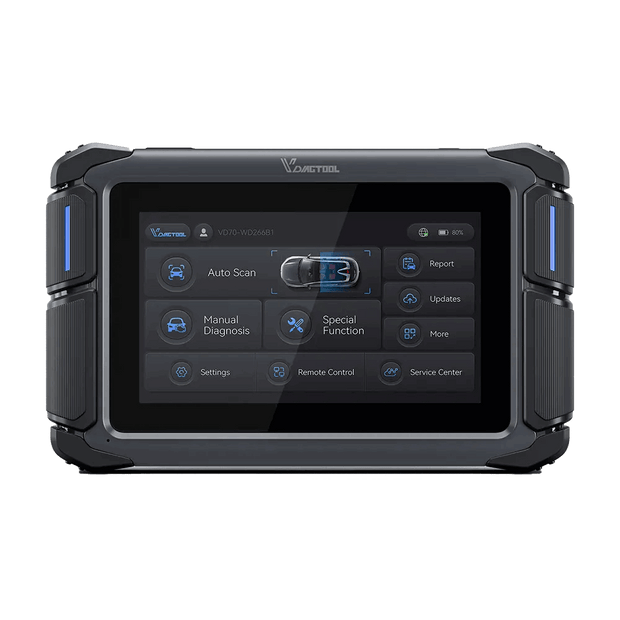
If you love working on your car—changing transmission fluid, upgrading parts, or troubleshooting complex issues—a mid-range scanner ($150-$500) is worth the investment. The VD70Lite is a favorite among DIYers: it supports 31+ maintenance functions, works with most makes/models. I used it to reset the oil change light on my Ford F-150 and diagnose a hidden transmission issue that a code reader missed.

For Professional Mechanics (Commercial Repair & Precision Diagnosis)
Professional shops need high-end scanners ($500+) like the VD80BT. It supports FCA protocols (critical for luxury brands like Alfa Romeo or Chrysler), offers ECU coding, and cut diagnostic time by 40% (per feedback from a local repair shop owner). They're not just tools—they're business investments that improve efficiency and customer trust.
Practical Buying Guide: Key Tips to Avoid Mistakes
- Prioritize Your Needs: Ask yourself: "Will I only check codes, or do I need to perform deep maintenance?" Let that answer guide your choice.
- Check Compatibility: Ensure the tool works with your car's make, model, and year—especially if you drive a European or luxury vehicle.
- Skip Fancy Features: Don't pay for ECU programming if you're a new to car; But, don't buy a basic code reader if you DIY transmission work.
- Stick to Trusted Brands: VDIAGTOOL, ACARTOOL, and XTOOL are industry leaders with reliable customer support and regular updates.
FAQs: Answers to Your Most Asked Questions
- Can a code reader be upgraded to a scanner? No—most code readers lack the hardware and software to support advanced functions. Mid-range scanners may offer feature upgrades, but basic code readers are limited by design.
- How much should I spend? Casual drivers: $30-$100; DIY enthusiasts: $150-$500; professionals: $500+.
- Do new cars need scanners? New cars (0-3 years) rarely have major issues—save money with a code reader for basic checks.
- Are wireless tools reliable? Yes—Bluetooth code readers/scanners are just as accurate as wired models and offer more flexibility. But if you need ECU diagnosis, cable connection is more stable.
Conclusion: Choose Based on Your Actual Needs, Not Hype
Code readers and scanners aren't competitors—they're tools for different scenarios. Casual drivers will thrive with a budget code reader, while DIYers and professionals need the depth of a scanner. The worst mistake is buying more tool than you need (or fewer than you require).
Take 5 minutes to list your needs: Do you just want to clear a check engine light? Or are you rebuilding an engine? Let that list guide your purchase.
Investing in the right diagnostic tool saves time, money, and frustration. Choose wisely, and you'll never be stuck staring at that check engine light again.


